


Table of content.
- 1. Prioritize based on where your customers already shop
- 2. Being listed is not the same as having a marketplace strategy
- 3. Marketplace content is also a trust signal
- 4. Budget needs to be connected to realistic marketplace expectations
- 5. Make sure the operation is ready before demand starts growing
- 6. Expansion should follow the opportunity, not the desire to be everywhere
- The UAE marketplace opportunity is growing, but the foundations still matter
- How a premium beauty brand built stronger marketplace foundations
Launching on a marketplace can look straightforward from the outside: a brand uploads its catalogue, makes the products available, activates advertising, and starts selling. But going live is just the start.
What determines whether a marketplace becomes a sustainable sales channel often happens beyond the obvious setup. Brands need to understand where their customers already shop, how their products will be presented, whether inventory can support demand, how advertising will be managed, and who will own day-to-day operations once the catalogue goes live.
Whether the starting point is Amazon.ae, Noon, or eventually both, getting those foundations right before scaling can make a significant difference to long-term marketplace performance.
1. Prioritize based on where your customers already shop
Customers do not always choose the brand first. In many cases, they begin their product search on the marketplace they already know and trust. Someone who regularly uses Amazon may instinctively start there because they understand the delivery experience, returns process, and how the platform works, while another customer may naturally default to Noon.
That familiarity matters because marketplace choice is partly behavioural. If shoppers already use a platform for a particular category, a brand entering that marketplace becomes part of an existing purchasing habit. If they don’t, the brand may be asking customers not only to choose its product, but also to change where they normally shop.
This is why the decision to launch on a marketplace should start with the customer rather than the platform itself. Shopping behaviour can change by category, audience, country, and even purchase occasion, so brands should understand where demand already exists before deciding where to invest.
2. Being listed is not the same as having a marketplace strategy
One of the most common mistakes brands make is treating marketplaces as plug-and-play channels. From the outside, the process can look simple: upload the catalogue, launch advertising, and wait for orders. Products may go live, and some initial sales may follow, which can make the setup appear successful.
But being live does not mean the different parts of the marketplace operation are working together. Product content may be incomplete, keywords may not be used effectively, advertising may lack a clear structure, or inventory planning may not support the demand being generated.
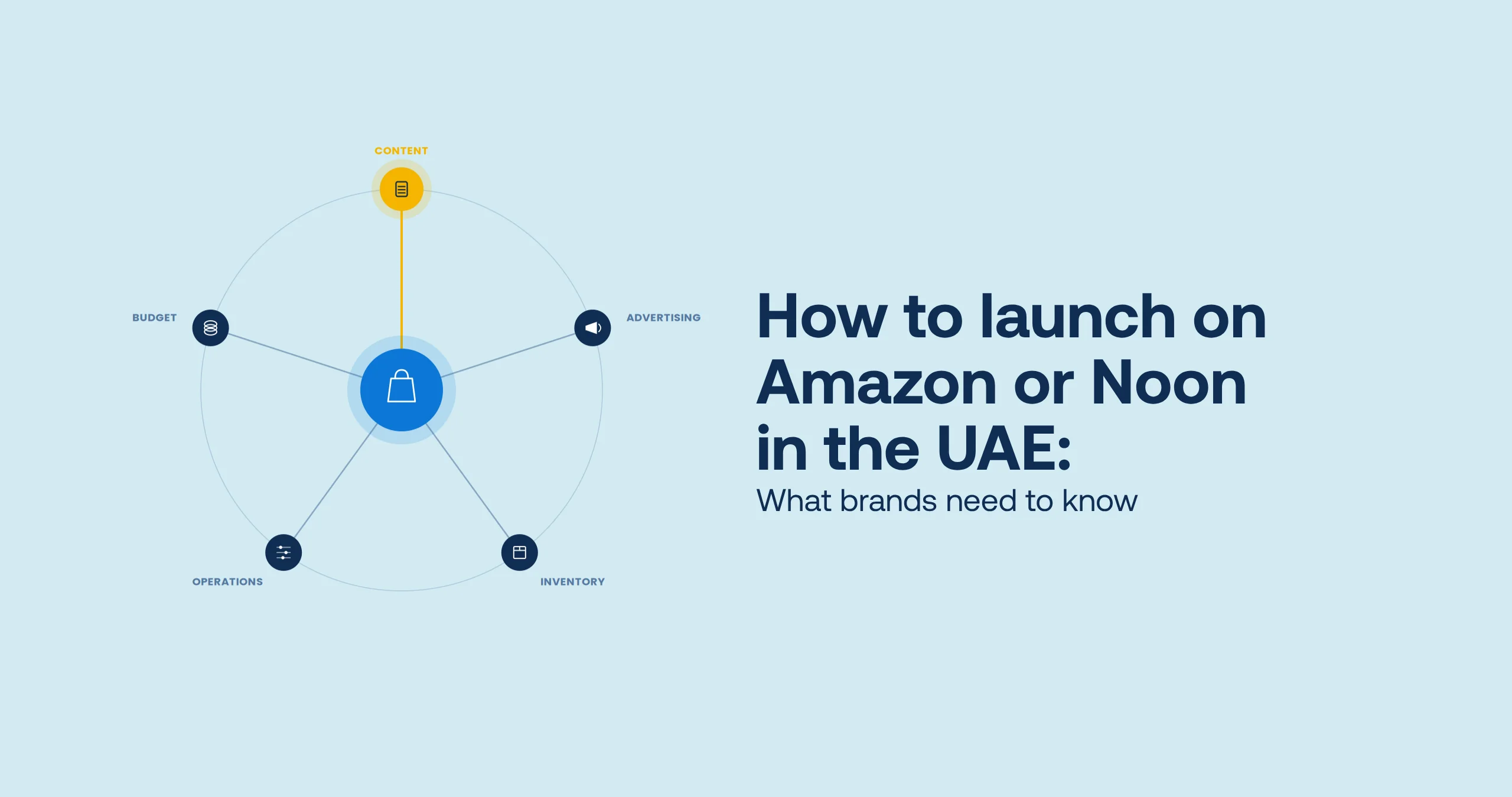
A sustainable marketplace strategy needs content, advertising, inventory, and operations to work together. Product pages need to represent the brand clearly, campaigns need defined objectives, stock levels need to support demand, and operational teams need to manage promotions, seasonal updates, catalogue changes, and budgets consistently.
Advertising cannot compensate indefinitely for a weak setup. If the fundamentals are not working, increasing media spend can simply amplify the existing problems rather than solving them.
3. Marketplace content is also a trust signal
Marketplace content does more than explain product features. It also helps shoppers decide whether they trust what they are seeing, particularly when they are comparing sellers, validating authenticity, or encountering the brand for the first time.
Small inconsistencies can create uncertainty. Visuals may not feel aligned with the brand, information may be incomplete, or the product page may look noticeably different from the experience customers see on the brand’s website or in physical stores. None of these issues may stop a purchase on their own, but together they can make the listing feel less credible.
Strong marketplace content should therefore be clear, complete, and consistent. Customers should be able to understand the product, find the information they need, and recognize the same brand positioning they encounter across other channels.
This becomes particularly important for premium brands. Selling through a marketplace does not automatically weaken premium positioning, but a poorly managed presence can. If the DTC experience feels carefully controlled while the marketplace catalogue feels generic or inconsistent, customers are effectively seeing two different versions of the same brand.
Many brands still see Amazon as a threat to their DTC business or feel the platform doesn’t align with their positioning, particularly in the premium and luxury space. But choosing not to sell there doesn’t mean their products won’t be present, often through third-party sellers who don’t invest in the brand experience. With the right strategy, Amazon can unlock new growth opportunities while keeping the brand at the heart of the experience.
Whitney Lupter, Marketplace Growth Manager
4. Budget needs to be connected to realistic marketplace expectations
Marketplace performance is not static, which makes budgeting difficult when expectations are defined without considering timing and market conditions. Competition, demand, advertising costs, and promotional intensity can all change during periods such as Ramadan, Prime Day, White Friday, or year-end peaks.
As a result, the same budget may not generate the same outcome throughout the year. A fixed investment can behave very differently depending on when it is deployed, how competitive the category becomes, and what the brand is trying to achieve.
Instead of starting with a fixed number and assuming a certain return, brands should connect budget, timing, and expected performance through scenario planning. A more useful question is: What can we realistically achieve with this budget under current conditions, and what would we need to invest to reach the next objective?
5. Make sure the operation is ready before demand starts growing
A marketplace launch also creates an operational workload that can easily be underestimated. Stock management, catalogue updates, promotional submissions, seasonal content changes, advertising budgets, and product availability all need ongoing attention once products are live.
The operational setup can also differ depending on the marketplace. On Noon, for example, brands can choose between Fulfilled by noon (FBN), where Noon manages storage, packing, shipping and returns, and Fulfilled by Partner (FBP), where the seller retains more control over fulfilment. Brands also need to manage their catalogue, inventory, pricing and overall account performance through the platform’s seller ecosystem.
Inventory is also important. A strong product page and successful advertising campaign create little long-term value if the product repeatedly runs out of stock. Marketplace performance therefore cannot be managed only through media; it depends on coordination between commercial, marketing, and operational teams.
The same applies to optimization. Marketplace accounts need regular monitoring, but that does not mean changing campaigns or listings every day. Teams need enough time and data to understand what is working while keeping a close eye on areas that can create immediate problems, such as stock availability, Buy Box status, and budget pacing.
6. Expansion should follow the opportunity, not the desire to be everywhere
Once a brand has established itself on one marketplace, expanding onto another can create access to a new audience or additional demand. But marketplace diversification should not become an objective in itself.
Every new platform introduces additional complexity. The brand needs to manage another catalogue, inventory position, advertising setup, pricing structure, promotional calendar, content ecosystem, and operational workflow. Expanding too early can spread resources across several platforms without building a strong position on any of them.
A better approach is to establish where the strongest initial opportunity exists, build the operation properly, and expand when the business case becomes clear. For some brands, that may eventually mean Amazon and Noon. Others may find that additional marketplaces become relevant depending on the category and audience.
The question should therefore not be “How many marketplaces can we launch on?” but rather “Where else does it make sense for our brand to be?”
The UAE marketplace opportunity is growing, but the foundations still matter
The scale of the opportunity helps explain why these decisions are becoming more important. According to the 2026 UAE E-commerce Report by EZDubai Logistics Hub and Euromonitor International, the UAE e-commerce market reached AED 42.2 billion in 2025, up from AED 17.6 billion in 2020.
For brands, however, a growing market does not remove the need for strong execution. Being present on Amazon, Noon, or another marketplace does not automatically translate into sustainable growth.
The brands best positioned to benefit are those that understand where their customers already shop and then build the content, advertising, inventory, and operational structure required to serve them properly.
How a premium beauty brand built stronger marketplace foundations
When a premium beauty brand launched on Amazon across the UAE and KSA, it entered the platform without historical performance data to guide its strategy. The client managed areas such as listings, inventory, and pricing internally, while Acquisit focused first on creating a stronger content foundation before scaling advertising.
For a premium brand, that meant ensuring the marketplace experience reflected the same standard customers would expect elsewhere. Acquisit provided guidance on product titles and bullet points and developed A+ Content, the Brand Story, and Brand Store. Once the content was retail-ready, the team activated the wider assortment rather than assuming that the brand’s DTC bestsellers would automatically behave the same way on Amazon. This allowed actual marketplace behaviour to reveal which products were emerging as hero SKUs and which were longer-tail products.
As performance data accumulated, the strategy became more granular. The client was able to make better assortment and inventory decisions, increasing stock behind stronger-performing SKUs while reducing exposure on longer-tail products. Further testing also showed the importance of the customer journey beyond the product page: in KSA, for example, an optimized Brand Store landing page used for DSP activity performed better than the non-optimized version, while audience insights helped inform more relevant creative production.
Through this full-funnel approach and ongoing optimization, the brand grew sales while continuing to acquire new customers. New-to-brand shoppers consistently represented around 50–60% of customers month to month, meaning a significant share had not purchased the brand on Amazon during the previous 365 days.
*Source: EZDubai Logistics Hub & Euromonitor International, UAE E-commerce Market Size Reaches AED 42.2 Billion in 2025, published by Dubai South.
Tags:
Marketplace AdvertisingTable of content.
- 1. Prioritize based on where your customers already shop
- 2. Being listed is not the same as having a marketplace strategy
- 3. Marketplace content is also a trust signal
- 4. Budget needs to be connected to realistic marketplace expectations
- 5. Make sure the operation is ready before demand starts growing
- 6. Expansion should follow the opportunity, not the desire to be everywhere
- The UAE marketplace opportunity is growing, but the foundations still matter
- How a premium beauty brand built stronger marketplace foundations
Share in social:

