



Table of content.
- 1. Start with the funnel, not assumptions
- 2. Navigation and product discovery may be getting in the way
- 3. Cart or form friction can stop high-intent users
- 4. Missing trust signals can create hesitation
- 5. Mobile experience and messaging may not fit the audience
- How customer behaviour reveals the real problem
- How a Saudi ecommerce retailer increased conversion rate by 60%
- Fix the bottleneck before buying more traffic
Many businesses in the GCC invest heavily in paid media, SEO, and other acquisition channels to bring more people to their website, but strong traffic does not always translate into sales or leads. When disappointed, our instinct is often to invest more in acquisition. However, we should ask: where are users dropping off, and what is stopping them from converting?
In many companies, the performance marketing team owns traffic and the marketing team owns the website. But responsibility for improving the user experience on the website is often unclear. That gap can lead to strong traffic but weak returns. Before investing more in acquisition, businesses need to identify where that journey is breaking down.
1. Start with the funnel, not assumptions
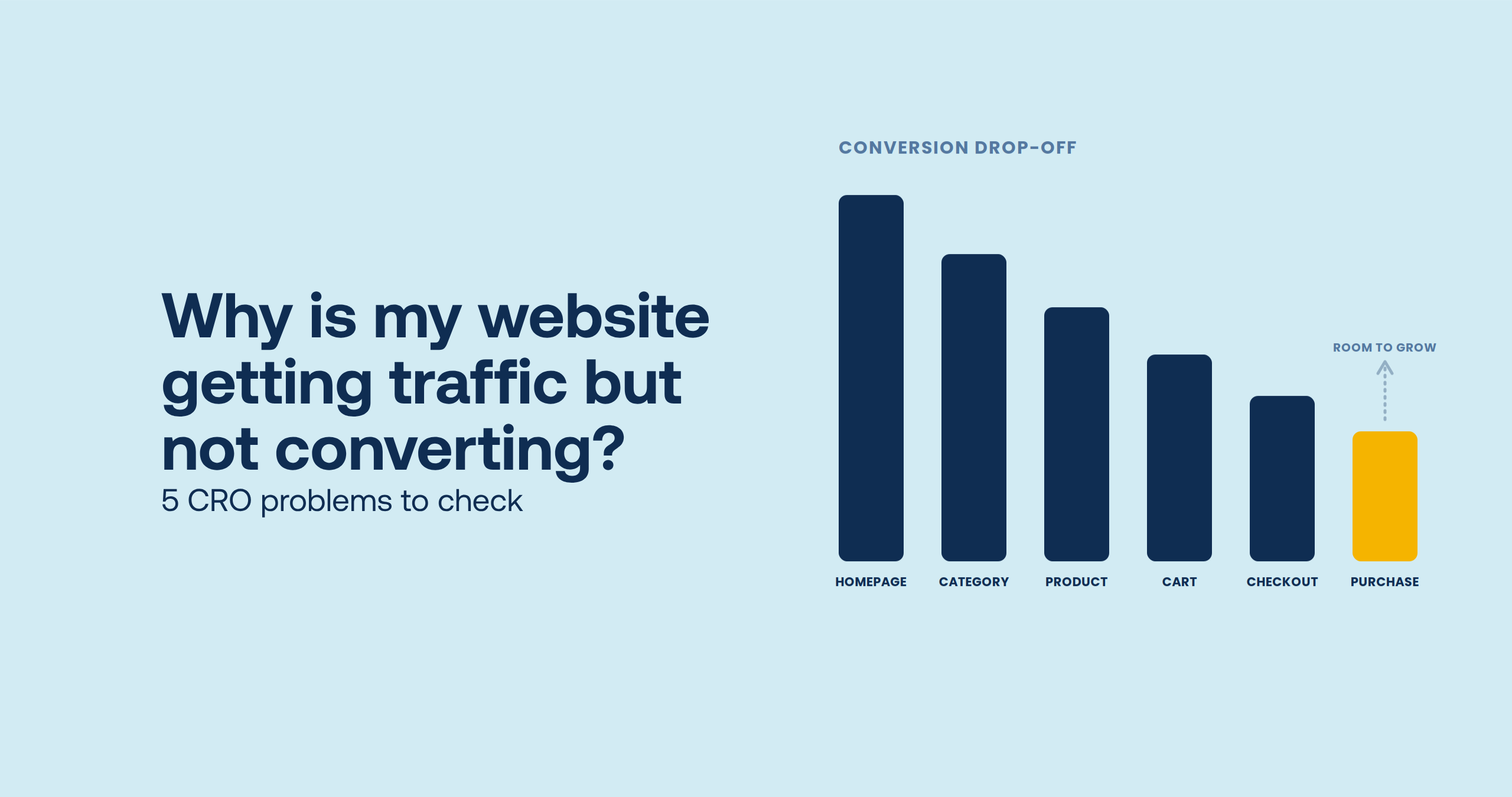
When conversion rate is weak, teams often jump to solutions by changing the homepage, rewriting the CTA, or simplifying the checkout process. But without understanding where users are dropping off, those changes are blind guesses. Step one should be to map the customer journey.
For Ecommerce brands, it may include:
- Homepage
- Category page
- Product page
- Cart
- Checkout
- Purchase
For a lead-generation businesses, it may include:
- Homepage
- Service page
- Contact page
- Lead form
- Form submission
The objective is to find the stages where the largest number of potential customers are being lost. Your website analytics data should show you.
2. Navigation and product discovery may be getting in the way
Users are less likely to convert when they cannot quickly find the products, services, or information they need. Common issues include:
- Important categories buried too deeply.
- Poor product discovery.
- Weak navigation.
- Best-selling items difficult to find.
- Important pages receiving less traffic than expected.
If users cannot find what they need quickly, conversion opportunities are lost before the purchase journey starts.
3. Cart or form friction can stop high-intent users
Users who reach the cart or checkout have already shown strong purchase intent, so friction at this stage can have a major impact on conversion. For lead-generation websites, the same applies to users who reach a contact or enquiry form. Common issues include:
- Asking for too much information.
- Complicated checkout steps.
- Unclear forms.
- Weak calls to action.
- Poor mobile usability.
Our goal is to make the next step clear and easy enough for the user to complete.
4. Missing trust signals can create hesitation
Sometimes, the barrier to conversion is not navigation or usability, but trust. Visitors may understand the offer and know how to buy, yet still hesitate because the website does not provide enough reassurance.
To build confidence, consider adding:
- Customer reviews and ratings
- Product authenticity guarantees
- Certifications and accreditations
- Clear, detailed product information
- Other forms of social proof
For e-commerce brands, these signals can give customers greater confidence in their purchase. For lead-generation businesses, trust may come from client testimonials, case studies, awards, or industry certifications. The right signals will depend on the business, but the principle remains the same: customers should not have to search for reassurance.
5. Mobile experience and messaging may not fit the audience
Sometimes, the website’s message simply does not resonate with its audience.
In one B2B project, Acquisit found that Arabic-speaking visitors were less engaged than English-speaking visitors. The Arabic copy was overly formal, the calls to action lacked clarity, and the website did not communicate the company’s value effectively.
We addressed it by:
- Adapting the Arabic copy for a Saudi audience
- Improving the website design
- Restructuring the page
- Strengthening the value proposition
- Testing the updated experience
These changes increased the Arabic homepage conversion rate by 37%. The key lesson is that localization is more than direct translation. The language, tone, and structure of a website all shape how clearly users understand the offer and whether they continue through the journey.
How customer behaviour reveals the real problem
Identifying where users drop off is only the first step. Businesses also need to understand why. Each data source reveals a different part of the customer journey:
Analytics shows what is happening and where users are leaving the funnel.
Heatmaps show where users click, scroll, and focus their attention.
Session recordings help reveal how visitors navigate pages and where they hesitate or get stuck.
Customer surveys provide direct feedback about objections, confusion, or friction.
Together, these sources move businesses from “We know this page has a problem” to “We understand what may be causing it and we have a hypothesis to test.”
How a Saudi ecommerce retailer increased conversion rate by 60%
For a leading Saudi beauty and personal care retailer, traffic was not the main challenge. The greater opportunity lay in what happened after customers arrived on the website.
Our analysis identified friction across several stages of the journey, including product discovery, navigation, cart, checkout, trust signals, and the mobile experience.
Instead of relying on a single major redesign, the team addressed these issues progressively. They improved the navigation, checkout, product pages, and category pages, using insights from more than 50 A/B tests and 15 customer surveys to determine which changes helped customers move forward.
Between 2023 and 2024, the retailer increased its conversion rate by 60%.
This growth came from a series of targeted, tested improvements based on real customer behaviour, not assumptions about what the website needed.
Fix the bottleneck before buying more traffic
More traffic can drive growth but only if the experience receiving that traffic can convert it. Before increasing acquisition budgets, businesses should ask: Are we losing growth because we need more visitors, or because too few of our existing visitors are converting? That distinction matters. CRO is not about changing everything on a website. It is about identifying the biggest source of friction, understanding why it exists, and testing the changes most likely to improve the customer journey.
For businesses looking to benchmark their website’s performance, Acquisit’s CRO Calculator can estimate the potential impact of improving conversion.
Tags:
Conversion Rate OptimizationTable of content.
- 1. Start with the funnel, not assumptions
- 2. Navigation and product discovery may be getting in the way
- 3. Cart or form friction can stop high-intent users
- 4. Missing trust signals can create hesitation
- 5. Mobile experience and messaging may not fit the audience
- How customer behaviour reveals the real problem
- How a Saudi ecommerce retailer increased conversion rate by 60%
- Fix the bottleneck before buying more traffic
Share in social:

