



Table of content.
- Why traditional tracking is becoming less reliable
- Missing data is not only a reporting problem
- What does “measurement as infrastructure” actually mean?
- A structured data layer
- GA4 configured around meaningful business events
- Consent Mode
- Server-side tracking
- Conversion APIs
- Offline, CRM and app data
- Better measurement does not mean tracking everything
- Why this matters for businesses in the GCC
- How better measurement infrastructure improved performance for a UAE retailer
For years, digital marketing measurement was straightforward. A click happened, it got tracked. A conversion followed, it got attributed. Today, that model no longer reflects reality. Privacy requirements, browser restrictions, consent choices, and changes to mobile tracking have reduced how much of the customer journey marketers can observe directly.
The impact goes beyond having a few missing conversions in a dashboard. When an advertising platform does not receive a conversion signal, it also has less information to learn from when deciding who to target, how much to bid, and where to allocate budget.
This is why measurement increasingly needs to be treated as part of the marketing infrastructure rather than simply a reporting function. Google Ads, for example, says conversion modeling through Consent Mode can recover more than half of ad-click-to-conversion journeys lost due to consent choices. However, results vary depending on the advertiser and implementation.
The point is that the quality of the measurement setup can directly affect the quality of the information marketers and advertising platforms use to make decisions.
Why traditional tracking is becoming less reliable
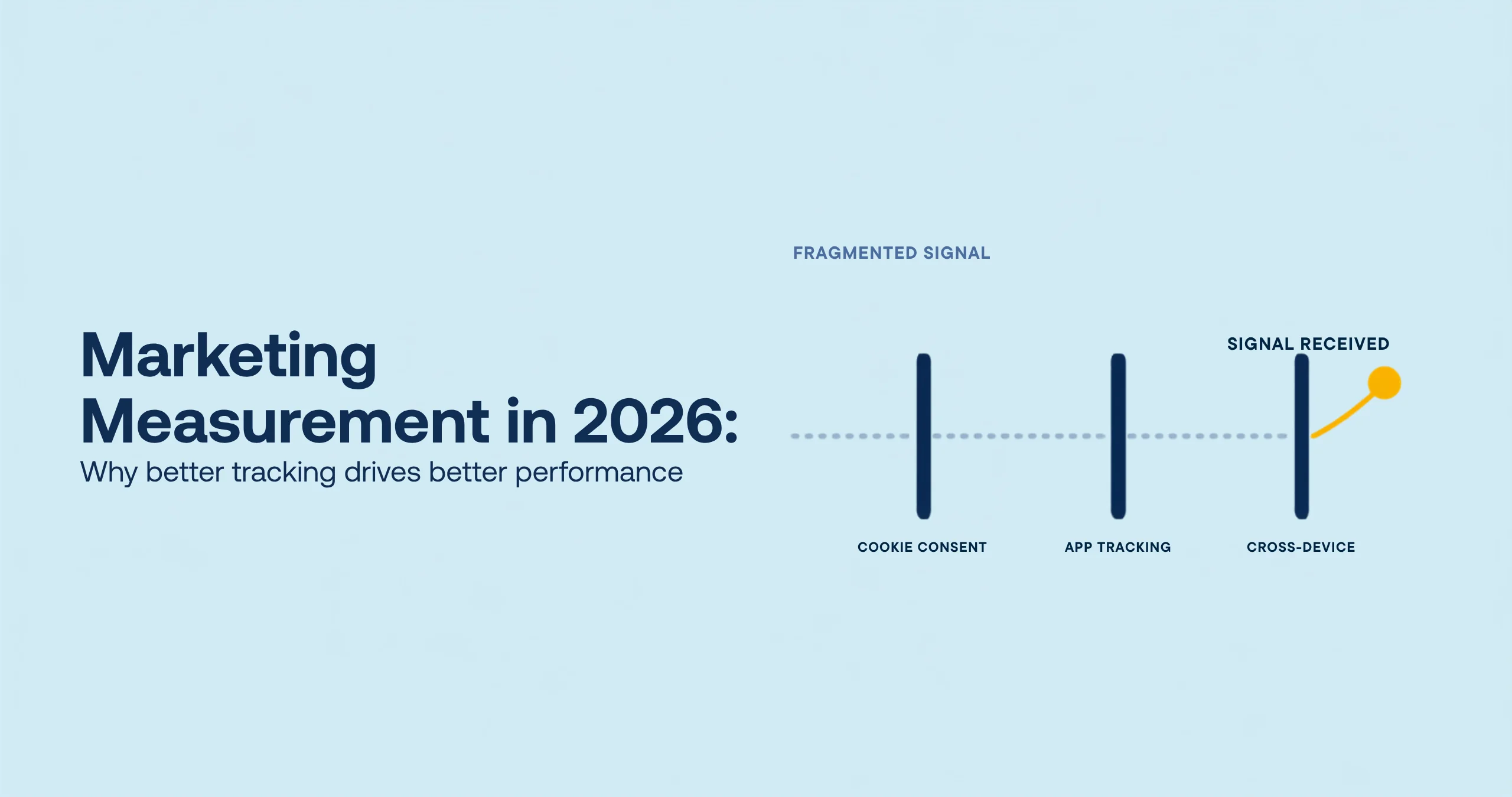
Traditional digital measurement relied on the ability to identify a user across different steps of the journey. Today, that journey is harder to observe. Some of the biggest reasons include:
- Users declining advertising or analytics cookies
- Browsers limiting how cookies can be used or how long they remain available
- Apple’s App Tracking Transparency reducing access to identifiers such as IDFA
- Customers moving between devices before converting
- Increasing privacy and consent requirements
- Customer journeys spanning websites, apps, offline channels and CRM systems
The data has become increasingly partial. A platform may still see that an ad received clicks. But if part of the resulting conversion activity is no longer observable, the campaign can appear less effective than it actually was.
Missing data is not only a reporting problem
Platforms such as Google and Meta increasingly rely on automated bidding and machine learning to make decisions at a scale no media buyer could manage manually. These systems learn from the signals they receive.
If the conversion data reaching the platform is incomplete, delayed, or poorly structured, the system learns from an incomplete version of customer behaviour. That can influence decisions such as:
- Which users receive ads
- Which audiences receive more budget
- How aggressively the platform bids
- Which campaigns or creatives appear to perform best
- How conversion value is interpreted
What does “measurement as infrastructure” actually mean?
Treating measurement as infrastructure means designing the system before asking the dashboard to tell you what happened. The goal is to build a reliable flow of useful signals between the business, its analytics tools, and its advertising platforms. Depending on the customer journey, that infrastructure can include:
A structured data layer
A clear data layer creates consistent definitions for the events and information collected across the website. Without that foundation, different tools may interpret the same customer action differently or receive inconsistent information.
GA4 configured around meaningful business events
Analytics should reflect the actions that matter to the business rather than tracking every possible interaction because it can.
Consent Mode
Consent Mode allows Google tags to adjust their behaviour based on a user’s consent choices and can enable conversion modeling where direct observation is limited. The objective is to maintain useful measurement while respecting the user’s privacy choices.
Server-side tracking
Server-side setups can give businesses greater control over how data is collected and sent between their website, servers, and marketing platforms. They can also reduce reliance on some browser-based tracking mechanisms. Server-side tracking is not a way to bypass consent or privacy requirements. It is a different technical architecture for managing data.
Conversion APIs
Platforms such as Meta allow businesses to send conversion signals through server-to-server integrations rather than relying only on browser pixels. Using browser and server signals together can create a more resilient measurement setup when implemented correctly.
Offline, CRM and app data
For many businesses, conversion does not end on a website. A lead may close several days later through a sales team. A customer may purchase in-store. An app user may complete an important action after installation. If those outcomes never make their way back into the measurement ecosystem, marketing platforms may be optimizing toward an incomplete definition of success.
Better measurement does not mean tracking everything
There is a temptation to respond to measurement loss by collecting as many events as technically possible. That can create a different problem, because not every action carries the same business value. A page view, scroll, product view, add-to-cart, and completed purchase represent very different levels of intent.
Measurement infrastructure should therefore begin with a more fundamental question: Which customer behaviours actually help us understand and optimize toward business value? The strongest setup is the one sending the right signals, with clear definitions, consistently, and with the appropriate consent.
Why this matters for businesses in the GCC
The technical principles of measurement are global, but the customer journeys of GCC businesses are not always simple.
A customer may:
- Discover a brand through Meta
- Research it on Google
- Browse the website in English
- Return later through an Arabic campaign
- Contact the business through WhatsApp
- Complete the purchase offline or through a sales representative
For ecommerce brands, the journey may also extend across direct-to-consumer websites and marketplaces. For lead-generation businesses, the most important conversion may happen inside a CRM long after the original media interaction.
A measurement setup built only around the final website form submission or ecommerce purchase can therefore miss important parts of the commercial journey. Businesses should understand which signals need to move between those systems so that reporting and optimization reflect accurately.
How better measurement infrastructure improved performance for a UAE retailer
For one major UAE grocery retailer, fragmented tracking was limiting both reporting and campaign optimization. The client’s app measurement was incomplete. Important in-app actions and purchases were not being captured consistently, and website conversions relied mainly on “thank you” page views rather than a structured data layer. Server-side tracking and Conversion APIs were also missing.
Over six months and four planned releases, Acquisit worked with the client’s development team to rebuild the measurement setup across app, web, and offline channels.
The implementation included:
- Strengthening app tracking through Adjust and Firebase
- Tracking deeper funnel events from product views to purchases
- Implementing ATT and SKAdNetwork 4.0 for iOS
- Building structured web data layers
- Introducing client-side and server-side Google Tag Manager
- Implementing server-side GA4 and Conversion APIs for Meta, Snapchat, and TikTok
- Connecting offline store orders to the wider measurement ecosystem
With stronger conversion signals, the client moved its bidding strategy from CPC toward ROAS. Following the implementation, Meta and Google Ads recorded a 30% reduction in CPA. The improved setup also revealed that CRM had previously appeared to be the strongest-performing channel partly because other digital touchpoints were not being captured accurately.
The result was not perfect attribution. Privacy limitations, particularly on iOS, still apply. But the business now had a more complete measurement infrastructure to support both media optimization and decision-making.
Tags:
MeasurementTable of content.
- Why traditional tracking is becoming less reliable
- Missing data is not only a reporting problem
- What does “measurement as infrastructure” actually mean?
- A structured data layer
- GA4 configured around meaningful business events
- Consent Mode
- Server-side tracking
- Conversion APIs
- Offline, CRM and app data
- Better measurement does not mean tracking everything
- Why this matters for businesses in the GCC
- How better measurement infrastructure improved performance for a UAE retailer
Share in social:

