



Table of content.
- Key peak season dates for UAE and KSA in 2026
- 1. Start with last year’s performance
- 2. Understand your competitive landscape
- 3. Align your offer, creative, and budget early
- 4. Complete your readiness checklist before the end of October
- 5. Use October and November to build demand
- 6. During peak, change less and monitor more
- 7. Do not stop after Black Friday
The November sales peak brings a significant boost to e-commerce in the GCC*, with sales climbing 44% above the monthly average. Spending rises by 31% in the UAE and 36% in Saudi Arabia, while interest in deal-related searches jumps 69%.
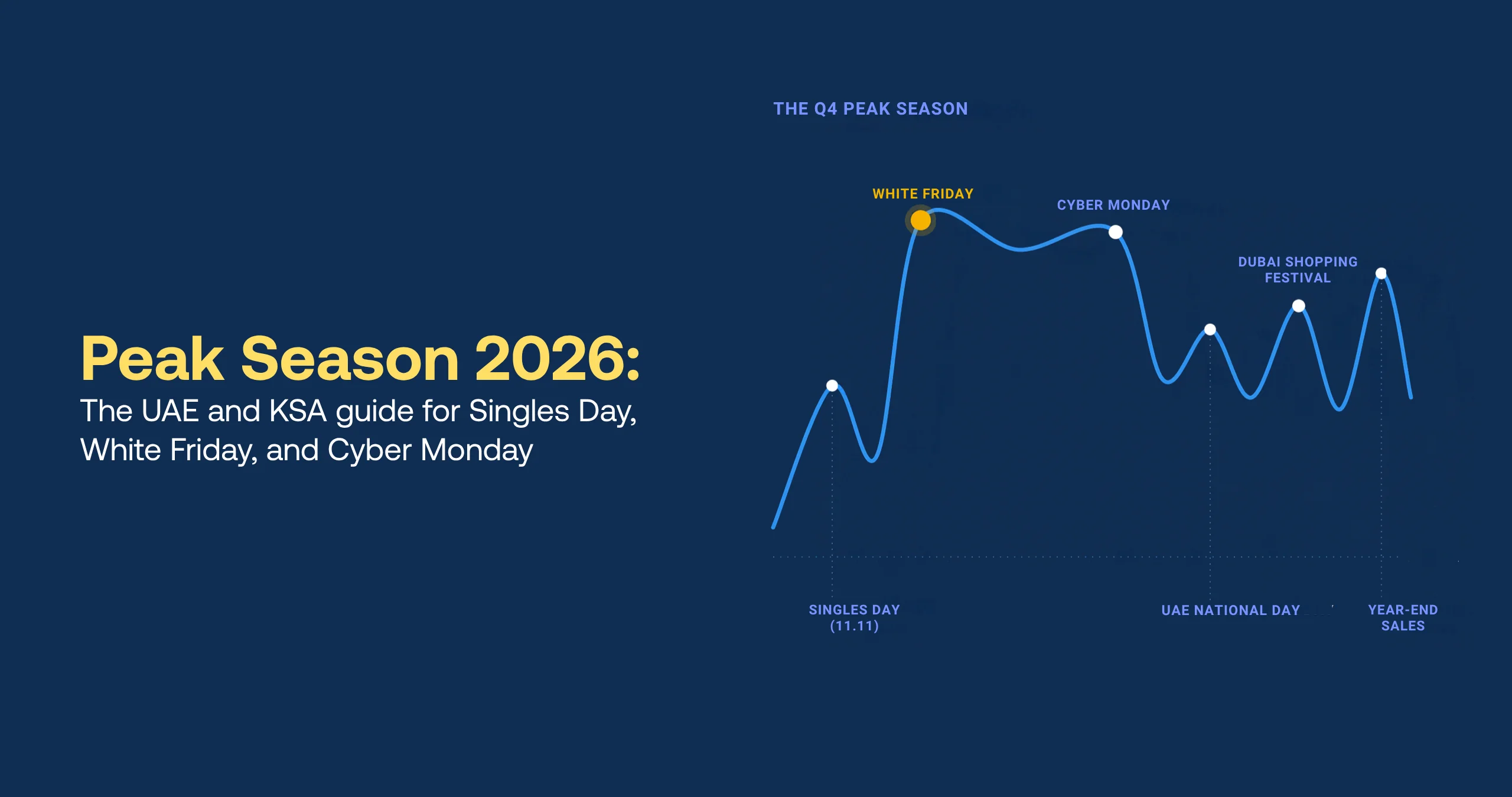
Strong peak-season results require more than a last-minute push in November. Across the GCC, Q4 brings a series of major shopping moments: from Singles Day and Black Friday (or White Friday) to Cyber Monday, UAE National Day, and year-end sales. To make the most of them, brands start planning weeks in advance.
In the following steps, we share Acquisit’s playbook for planning and delivering a successful Q4 peak season.
Key peak season dates for UAE and KSA in 2026
- Singles’ Day: 11 November 2026
- Black Friday / White Friday: 27 November 2026
- Cyber Monday: 30 November 2026
- UAE National Day / Eid Al Etihad: 2-3 December 2026
1. Start with last year’s performance
The first step in building a successful Q4 plan is understanding what happened during the previous peak season. This gives you a clear baseline for deciding what to repeat, refine, or leave behind.
Make sure to review:
- Campaign activation dates and offers
- Products and creative assets
- Media channels and budget
- Traffic and sales
- Conversion rate and Average Order Value
- CPM and CPC
- New vs returning customers
Pay particular attention to the daily performance curve. When did demand start increasing? When did performance peak? When did it decline? Analyze each market separately, as behaviour can differ significantly across the GCC.
2. Understand your competitive landscape
Understanding your own past performance is important. But you should also know how your competitors approached the previous peak period.
Look at:
- Campaign offers and activation dates
- Products promoted
- Marketplace activity
- Competitors that became more aggressive during peak
Meta Ad Library, Google Auction Insights, competitor websites, and CRM communications can all help build a clearer picture of the market. It is also worth identifying brands that increased their visibility during the last peak period and maintained that presence afterwards, as they may represent a more serious competitive threat this year.
If the brand also sells through Amazon, Noon, or other e-retailers, look at what those channels are promoting and when. The brand’s own website should still give customers a reason to buy directly, whether through exclusive products, offers, services, or promotional timing.
3. Align your offer, creative, and budget early
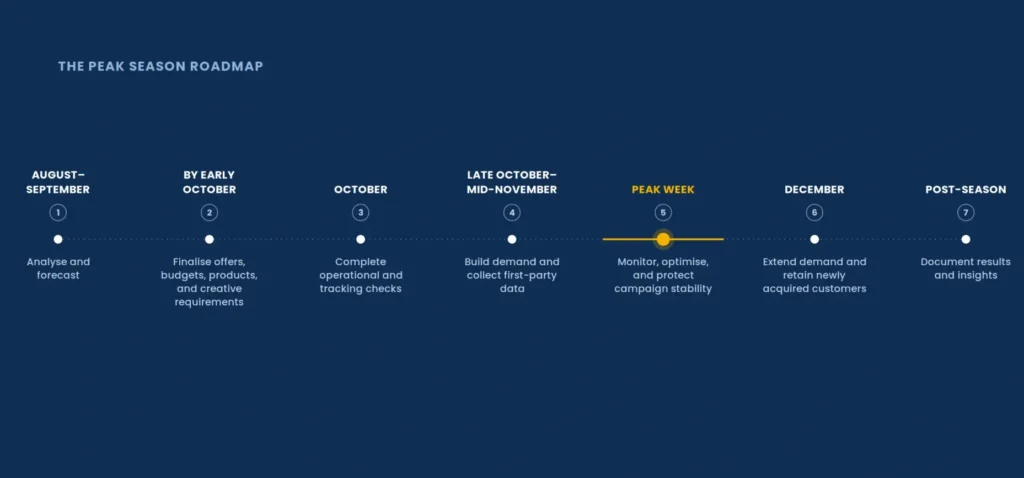
By early October, you should aim to have done the main commercial decisions already. This gives media, creative, ecommerce, and CRM teams enough time to prepare instead of reacting once peak season starts.
That includes:
- Campaign activation dates
- Promotional mechanics
- Media budget
- Creative requirements
- Pre-peak activity
Waiting until November leaves little time to build demand or fix operational issues. A strong peak-season offer should not rely only on discounts. It should focus on three levers:
- Price: Discounts, bundles, or gifts with purchase.
- Convenience: Free delivery, lower delivery thresholds, same-day delivery or flexible payments.
- Rarity: Exclusive products, loyalty benefits, private sales or early access.
4. Complete your readiness checklist before the end of October
Peak demand can quickly expose weaknesses that may go unnoticed during a normal trading period. A slow website, a checkout issue, or an incorrect product feed becomes far more costly when traffic and media investment increase. Before launch, validate four key areas.
Website and checkout
Review the customer journey on both mobile and desktop. Make sure checkout is simple, guest checkout is available, and relevant payment methods are live and working correctly. This includes buy now pay later options.
Stock
Make sure inventory can support the full promotional period. If availability is limited, prepare a replenishment plan, prioritize certain products, or adjust campaigns as items sell out. Driving demand toward unavailable products wastes media budget and creates a poor customer experience.
CRM and first-party data
Refresh customer lists across platforms and make sure previous peak-season buyers are available as audiences where relevant. Email, SMS, and WhatsApp activity should also be aligned with the paid media calendar, so customers receive a consistent message across channels rather than disconnected promotions.
Measurement and feeds
Validate conversion tracking and make sure teams have clear visibility on performance once the peak begins. Product feeds should also be checked in advance for disapprovals, incorrect pricing, sale prices, and missing promotions. These issues are much easier to fix before traffic starts increasing.
5. Use October and November to build demand
Peak-season marketing should start before the promotion itself goes live. The weeks leading into the main sales period give brands an opportunity to build audiences, collect first-party data, and capture interest before competition becomes more intense.
Build and warm audiences
Use awareness and traffic campaigns to grow remarketing pools before competition intensifies. October activity should not necessarily be judged only on immediate revenue. Audience growth and first-party data can also be important outcomes.
Collect first-party data
Give customers a reason to sign up before the sale, such as early access. This builds valuable audiences while also creating exclusivity.
Capture search demand early
Cover relevant seasonal search terms before peak, including local variations such as Black Friday and White Friday.
Protect campaign learning
Keep core conversion campaigns stable and ramp budgets ahead of peak rather than rebuilding campaigns on launch day.
6. During peak, change less and monitor more
The hard work of the peak season usually happens before it starts. Once the sale is live, teams feel the most pressure to act, and it’s also when performance is least predictable. A single bad hour or a spike in CPMs can look like a crisis when it’s just the market moving. What works for us is agreeing in advance what would actually justify a change, so every decision is based on a real signal.
Raya Succar, Director of Operations & Client Excellence
Once the main sales period begins, large structural changes to campaigns can disrupt delivery and learning at exactly the moment when demand is strongest. That does not mean campaigns should be left untouched, but changes should be deliberate and based on clear performance signals.
Focus on:
- Refreshing creative assets if needed
- Increasing budgets based on performance
- Reviewing CPA and ROAS targets
- Monitoring new and returning customers separately
- Keeping backup offers and creatives ready
Teams should also review budget pacing, impression share, stock, feeds, website speed, and checkout every day. The goal is to avoid unnecessary disruption at the most important moment of the season.
7. Do not stop after Black Friday
December is often under-invested because a large portion of Q4 budgets has already been spent by then, but there can still be meaningful commercial opportunities through:
- UAE National Day
- Holiday gifting
- End-of-year sales
- Dubai Shopping Festival
- End-of-year promotional activities in KSA
Brands should reserve budget for these periods rather than spending everything before December. The customers acquired during peak should also feed future acquisition and retention activity. Refresh audience lists, review new competitors, and document the season’s performance so the learnings are ready for next year.
*Source: Google/Visa research, KSA and UAE, September 2025, published by Think with Google.
Tags:
Performance MarketingTable of content.
- Key peak season dates for UAE and KSA in 2026
- 1. Start with last year’s performance
- 2. Understand your competitive landscape
- 3. Align your offer, creative, and budget early
- 4. Complete your readiness checklist before the end of October
- 5. Use October and November to build demand
- 6. During peak, change less and monitor more
- 7. Do not stop after Black Friday
Share in social:

